
 Colombia
 México
 Italia
 Francia
 Alemania
🧘 7 Exercises to Improve Posture at Home: A Practical Guide for a Healthy Back
The Challenge of Maintaining Good Posture in the Digital Age
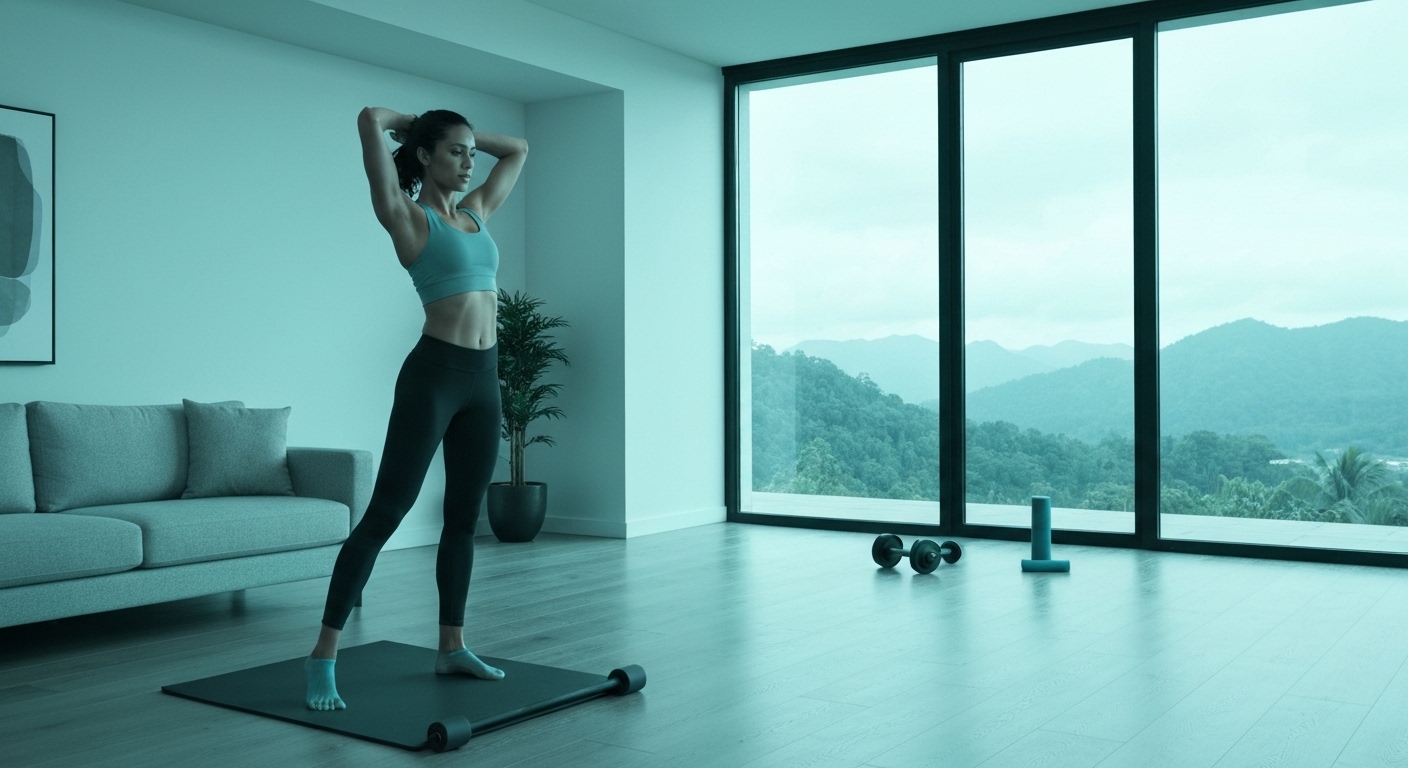
We spend a large part of our day in front of screens, whether working at a desk, checking our phones, or relaxing on the couch. Without realizing it, our bodies begin to adopt a hunched position: shoulders forward, neck protruding, and lower back losing its natural curvature. This phenomenon, often referred to as 'office posture' or 'tech neck', is not just an aesthetic issue; it is one of the main causes of fatigue, muscle tension, and lack of energy at the end of the day.
The real problem is not the lack of will to 'sit up straight', but rather that our muscles adapt to the positions we maintain for extended periods. The good news is that you don’t need expensive equipment or hours of intense training to reverse this. With a focus on mobility and consistency, it is possible to retrain the body and regain a more balanced and comfortable body posture.
Why Do Traditional Methods Fail?
Many people try to improve their posture by forcing a rigid, military-like position for a few minutes, only to forget about it shortly after. The key is not in rigidity, but in flexibility and strengthening the stabilizing muscles. The exercises to improve posture that really work are those that release the accumulated tension in the chest and activate the back muscles that tend to be 'asleep' due to inactivity.
The Importance of Mobility and Back Exercises
To improve posture, we must work on two fronts: joint mobility and gentle strengthening. Mobility allows our joints to move through their full range of motion without restrictions, while back exercises help support the spine efficiently.
- Chest Opener: Spending too much time hunched over causes the pectoral muscles to shorten. Stretching them is the first step to getting the shoulders back in place.
- Scapular Activation: Learning to move the scapulae (the 'shoulder blades') is essential to prevent the upper back from rounding excessively.
- Core Stability: A strong abdomen is not just about aesthetics; it is the main support for our spine.
Practical Routine to Start Today
This routine is designed to be done in any corner of your home, without the need for additional equipment, in a maximum time of 20 to 30 minutes. It is ideal for beginners and focuses on the quality of movement over quantity.
1. Warm-Up (5 minutes)
The goal is to prepare the joints and gently raise the body temperature.
- Shoulder Circles: Perform 15 repetitions backward, exaggerating the movement to feel how the collarbones open up.
- Neck Rotations: Move your head gently from side to side (as if saying 'no') and from shoulder to shoulder, without jerking your head backward.
- Cat-Cow: Get into a four-point position (hands and knees). Inhale while arching your back gently looking forward; exhale while rounding your back, pushing the ground with your hands and looking at your belly button. Repeat 10 times.
2. Main Activity: Posture Block (15-20 minutes)
Perform 2 sets of the following exercises, resting 30 seconds between each one.
- Wall Slides: Lean your back, glutes, and head against a wall. Bend your elbows at 90 degrees and try to keep your arms against the wall while sliding them up and down. Perform 12 repetitions. It’s excellent for shoulder mobility.
- Bird-Dog: In a four-point position, extend your right arm forward and your left leg back simultaneously. Keep your back straight and your abdomen contracted for 3 seconds. Switch sides. Do 10 repetitions per side.
- Gentle Cobra: Lie face down with your hands under your shoulders. Gently press the ground to lift your chest, keeping your pelvis glued to the mat and shoulders away from your ears. Feel the extension in the middle of your back. Hold for 15 seconds and repeat 5 times.
- Scapular Retraction: Sitting or standing, imagine you want to squeeze a pencil between your shoulder blades. Hold the contraction for 5 seconds and relax. Do 15 repetitions.
3. Cool Down and Stretch (5 minutes)
Finish by relaxing the worked muscles.
- Child's Pose: Kneel and bring your glutes towards your heels, extending your arms forward on the ground. Breathe deeply for 1 minute.
- Chest Stretch in Door Frame: Place one forearm on the door frame and gently turn your body to the opposite side until you feel the stretch in your pectoral. Hold for 30 seconds on each side.
Tips to Maintain Results
The exercises to improve posture are effective, but their impact multiplies if you adjust small daily habits:
- 30-Minute Rule: Set an alarm to get up, stretch, or simply change positions every half hour of work.
- Adjust Your Screen: Ensure that the top edge of your monitor or laptop is at eye level to avoid tilting your neck.
- Listen to Your Body: If you feel tension, don’t wait for it to turn into pain. Do a couple of scapular retractions or quick stretches at the moment.
Frequently Asked Questions about Posture
Improving posture is a gradual process. If you do these exercises at least 3 times a week, you will start to notice greater body awareness and less tension in 2 to 3 weeks. The key is consistency, not intensity.
These exercises are low-impact and promote general mobility. However, if you experience sharp, stabbing pain or pain that radiates down your legs, it is essential to consult a healthcare professional before continuing any routine.
Posture correctors can serve as a temporary reminder, but they do not strengthen the muscles. The most effective long-term solution is to develop the strength and natural mobility of your own body through active exercise.
Explore more about how to take care of your overall health in our related articles:
Activa tu bienestar hoy
Empieza con una rutina sencilla y construye el hábito paso a paso.