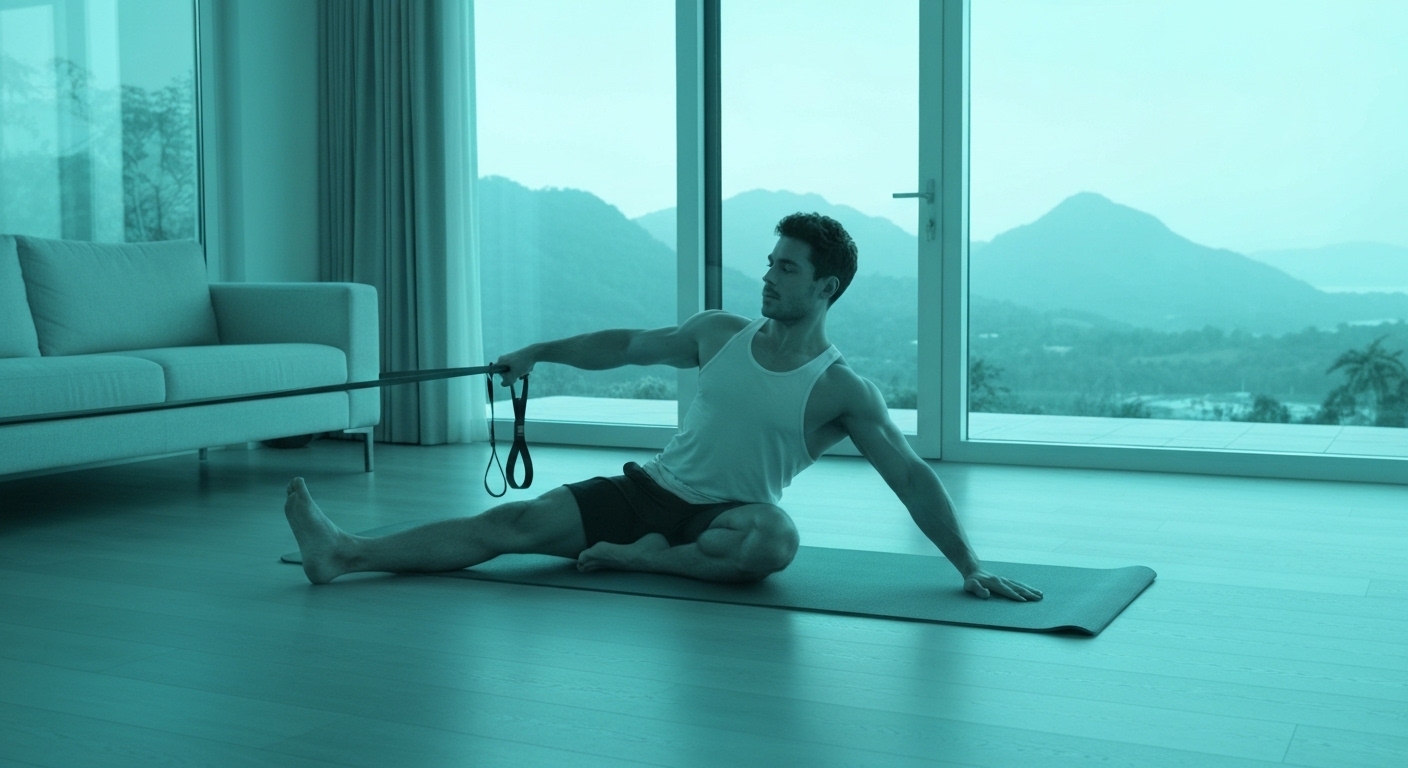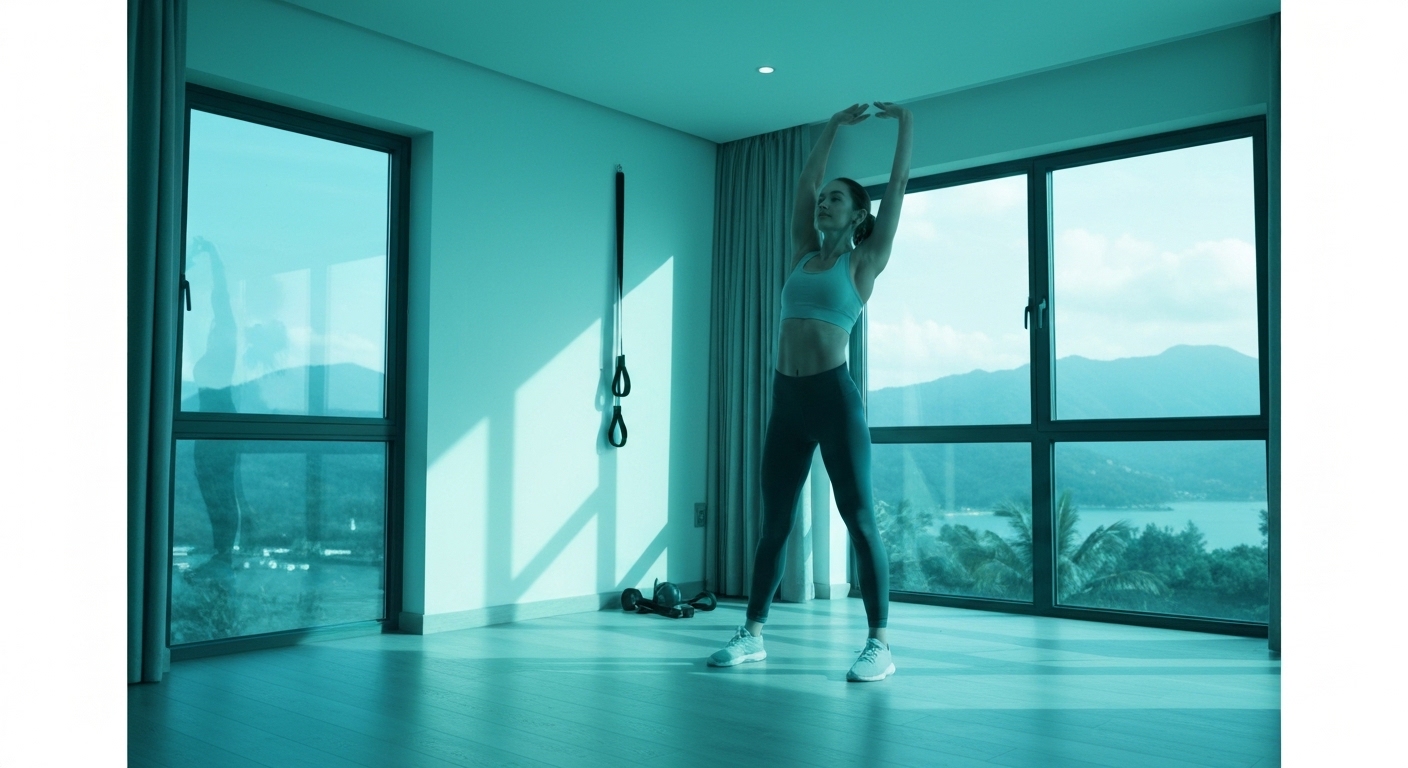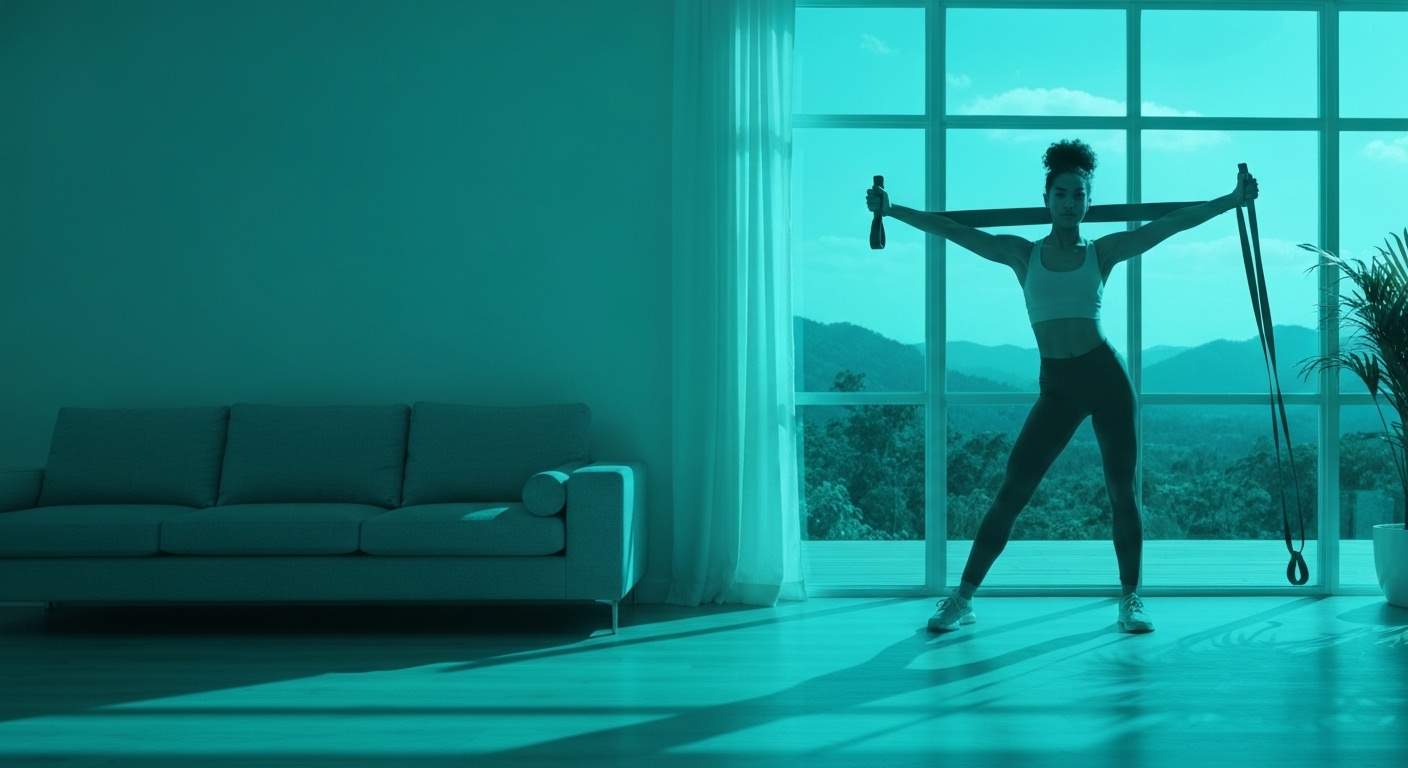

 Colombia
 México
 Italia
 Francia
 Alemania
💪 Home Exercises Without Equipment: A Realistic Guide to Activate Your Body
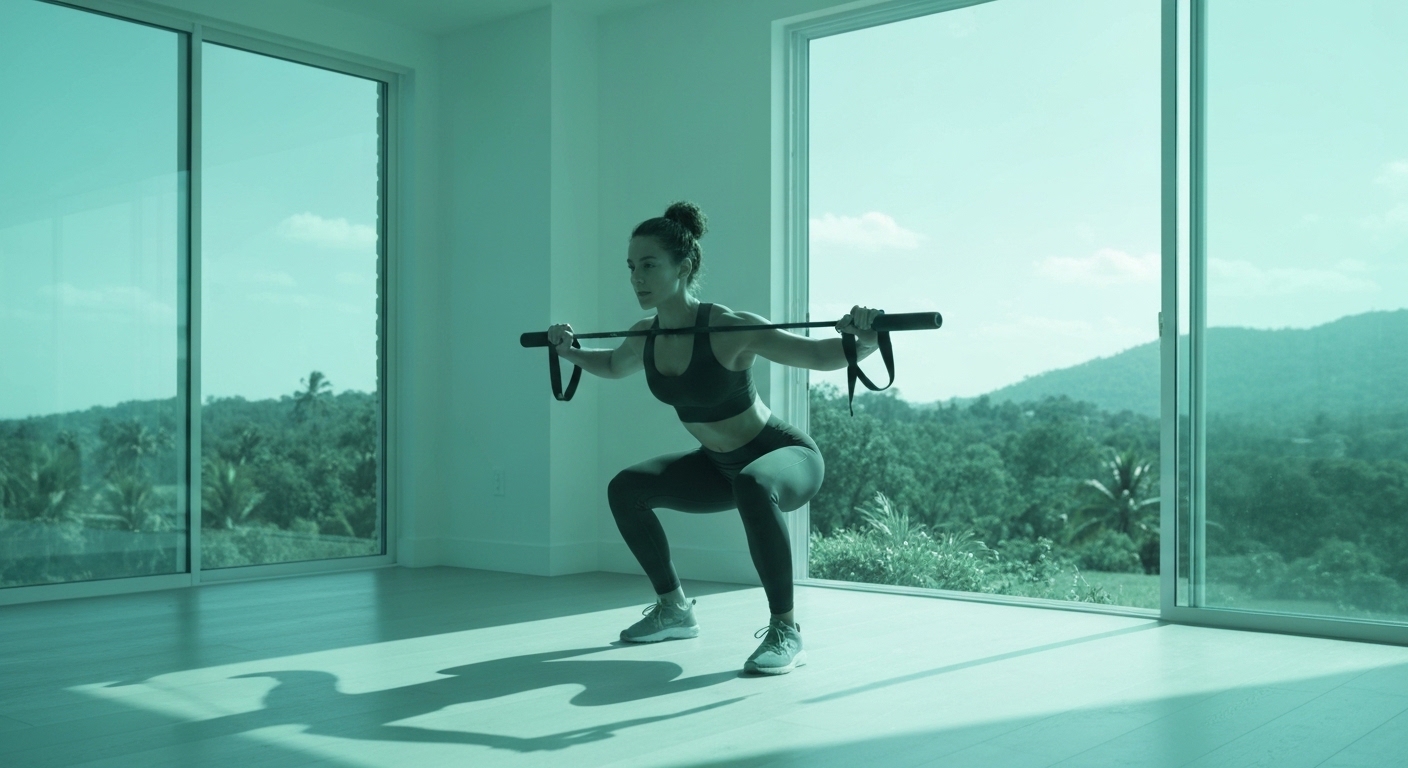
The Gym Myth: Why Home Exercises Without Equipment Are Enough
In today's culture, we often believe that to be healthy or 'fit' we need an expensive gym membership, state-of-the-art machines, or a complete set of weights in the garage. However, this belief often becomes the first barrier that prevents us from starting. The lack of time to commute, a tight budget, or simply the shyness of training in front of others keeps us in a sedentary lifestyle.
The reality is much simpler: your own body is the most versatile and effective tool you possess. Home exercises without equipment are not only a valid alternative, but they also represent one of the most functional ways to train. By working with your own weight, you improve coordination, flexibility, and strength in a way that directly translates into your daily activities, such as carrying groceries, climbing stairs, or playing with your children.
Overcoming the Time Barrier
The real problem is often not the lack of hours, but the perception that if we don't train for a full hour, it's not worth it. This 'all or nothing' mindset is the enemy of well-being. Fifteen or twenty minutes of conscious movement are infinitely better than zero minutes of planned perfection. Home training eliminates commute times and allows you to integrate physical activity into the gaps in your schedule, turning your living room, bedroom, or even a small balcony into a health space.
Benefits of a Bodyweight Training
When you opt for a weightless routine, you are betting on sustainability. Here’s why this approach is ideal for the long term:
- Lower risk of injury: By not adding excessive external loads, it’s easier to listen to your body and maintain proper technique, especially if you are a beginner.
- Improved mobility: Many bodyweight exercises require full ranges of motion, which helps release the tension accumulated from spending hours sitting in front of a computer.
- Mind-body connection: By not relying on a machine to guide the movement, your brain has to work harder to stabilize each muscle, improving your balance and proprioception.
- Total accessibility: You can maintain your habit even if you travel or have a particularly chaotic day. There are no excuses when the equipment is you.
How to Create a Habit That Really Lasts
Most people abandon their routines because they try to go from zero to a hundred in a week. Well-being is not a sprint, but a marathon of consistency. For your easy exercises to become a lifestyle, consider the following:
1. Define Your Realistic 'Why'
Instead of seeking a radical physical transformation in 30 days (which is often unrealistic and frustrating), focus on how you feel. Do you have more energy in the afternoon? Do you sleep better? Does your back hurt less? Those are the success indicators that really matter.
2. Prepare the Environment
You don’t need a dedicated exercise room. Just clear a small area and have your comfortable clothes handy. If you have to move heavy furniture every time you want to train, you’ll end up not doing it. Simplify the starting process.
3. The 5-Minute Rule
On days when motivation is nonexistent, promise yourself to move for just 5 minutes. Almost always, once you start, your body activates and you finish the session. And if not, those 5 minutes will have kept the discipline of the habit alive.
Practical Routine to Start Today
This routine is designed to activate your entire body, improve circulation, and strengthen major muscles without the need for any accessories. It’s ideal for beginner or intermediate level.
Phase 1: Dynamic Warm-Up (5 minutes)
The goal is to raise your body temperature and prepare your joints.
- Joint Rotations: Gentle circles with your neck, shoulders, wrists, and ankles (1 minute).
- Marching in Place: Walk in place by lifting your knees (2 minutes).
- Arm Openings: Open and close your arms as if you were going to give a hug, coordinating with gentle lateral steps (2 minutes).
Phase 2: Main Block (15-20 minutes)
Perform each exercise for 40 seconds, followed by 20 seconds of rest. Repeat the circuit 3 times.
- Controlled Squats: Keep your back straight and lower your hips as if you were going to sit in an invisible chair. You don’t need to go too low; prioritize stability.
- Wall or Knee Push-Ups: If traditional push-ups are difficult, place your hands on a wall or keep your knees on the ground. Focus on pushing strongly.
- Alternating Lunges: Step forward and lower your back knee toward the ground. Keep your torso upright.
- Plank: Support your forearms and toes (or knees). Keep your body aligned like a plank, activating your abdomen.
- Glute Bridge: Lie on your back with your knees bent and raise your hips toward the ceiling, squeezing your glutes as you rise.
Phase 3: Cool Down (5 minutes)
Do not skip this step; it’s vital for regulating the nervous system.
- Back Stretch: In a quadruped position, arch and round your back gently (Cat-Cow).
- Deep Breathing: Sit or lie down and take 10 deep breaths, inhaling through your nose and exhaling slowly through your mouth.
Final Tips for Success
Remember that progress is not linear. There will be days when you feel very strong and others when you can barely complete the warm-up. Both days count. The important thing is not to punish yourself for 'bad' days and to celebrate the intention to take care of your health. Home exercises without equipment are your tool for freedom: use them to feel better, not to punish your body.
Frequently Asked Questions
Yes, it is totally possible. By varying the time under tension, repetitions, or the difficulty of the variations (for example, going from wall push-ups to floor push-ups), you can continue challenging your muscles and gaining functional strength.
To start, 3 times a week is an excellent and sustainable goal. Leave a day of rest or light activity (like walking) between sessions to allow your muscles to recover.
Exercise should be a challenge, but it should never cause sharp pain. If you feel discomfort in your knees or back, reduce the range of motion or choose an easier variation. Listening to your body is the key to long-term well-being.
Explore more health tips in our articles about:
Activa tu bienestar hoy
Empieza con una rutina sencilla y construye el hábito paso a paso.